

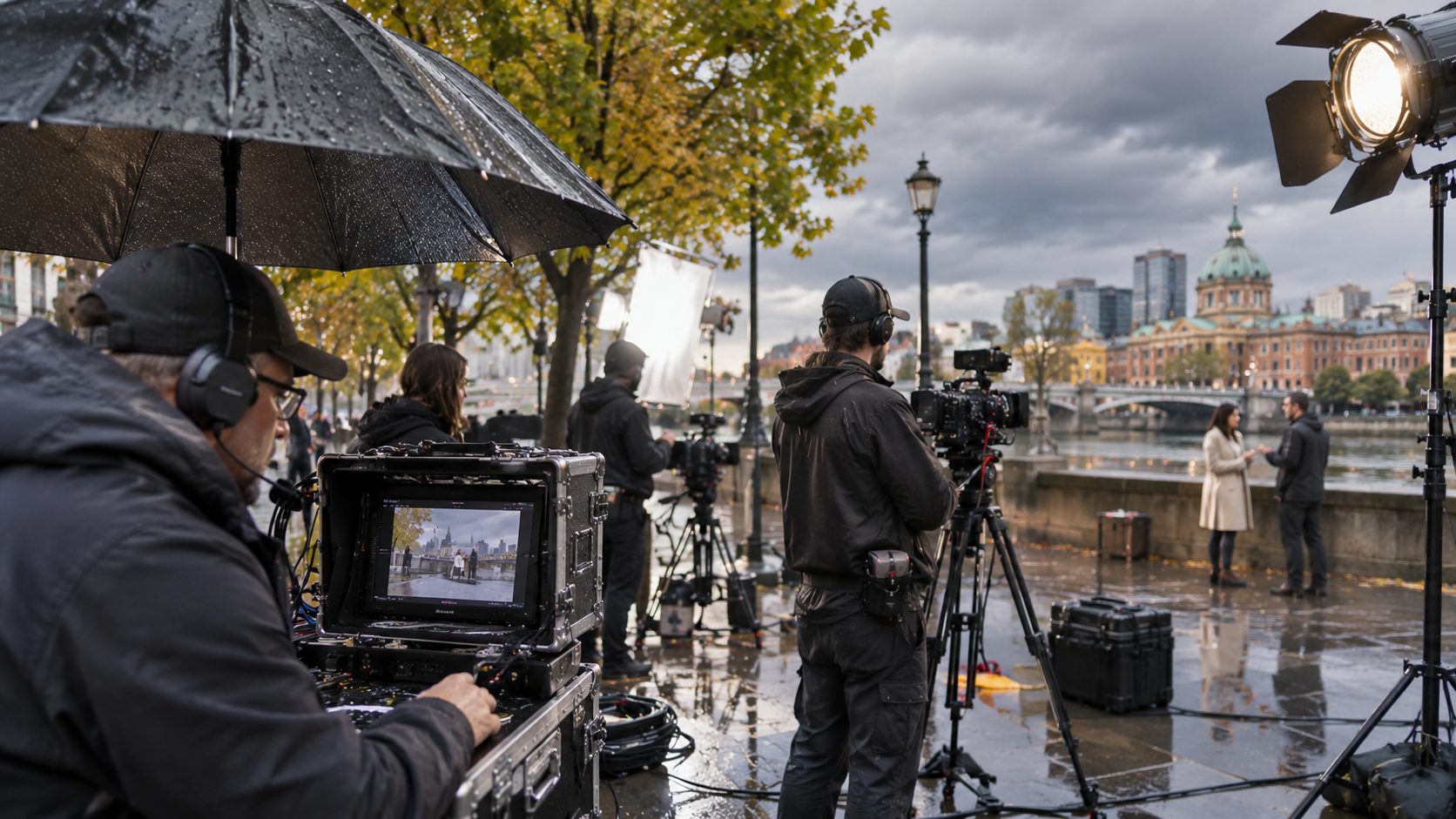
Melbourne’s reputation for “four seasons in one day” isn’t just a joke for tourists. Anyone who has planned an outdoor shoot in this city knows the feeling. The morning starts with clear blue skies, a cold change rolls through by lunch, and by mid-afternoon the crew is sheltering equipment under a gazebo while the client checks the forecast for the third time.
Weather can’t be controlled, but its impact on a shoot can. The difference between a lost day and a successful one usually comes down to planning, flexible scheduling and knowing how to work with changing light. Here’s how experienced crews handle it.
The Problem: Light and Weather That Won’t Sit Still
Outdoor footage is shaped by natural light more than any other factor. When the sun is out, you get crisp colours and strong shadows. When the cloud rolls in, the light turns soft and flat. When the two keep swapping, shots filmed ten minutes apart can look like they were captured on different days.
That inconsistency is the real enemy. A presenter delivering a two-minute piece to camera might be lit by harsh sun at the start and dull grey light by the end. Viewers notice, even if they can’t explain why the video feels off.
Wind brings its own problems. It ruins audio, shakes lightweight stands and sends hair across faces. Rain, of course, can stop a shoot entirely if the crew isn’t prepared.
Part of the reason is geography. Melbourne sits where warm air from inland Australia meets cool systems from the Southern Ocean. That mix creates rapid temperature drops, sudden wind shifts and showers that arrive with little warning, especially in spring.
Many outdoor shoots also happen during spring and early summer, when days are longer and locations look their best. Unfortunately, that’s also when the weather tends to be most changeable.
Solution 1: Plan Around the Forecast, Not the Calendar
Good planning starts days before the shoot. Crews that handle video production Melbourne clients rely on usually watch several forecasts, including rain radar and hourly wind predictions, rather than a single daily summary.
Build flexibility into the schedule. Lock in a primary shoot day and a backup day with talent and location owners, and agree on a clear decision time, such as 6pm the night before, for calling it either way. That way nobody is left guessing at dawn.
On the day, front-load the most important outdoor shots. If the morning is clear, capture the hero footage first and leave close-ups, interviews and indoor scenes for later.
It also pays to scout an indoor or covered backup location close to the main one. A nearby laneway arcade, a covered courtyard or a building foyer can keep the day moving if a shower arrives. Let the client know about the backup in advance, so a change of plan feels organised rather than rushed.
Solution 2: Control the Light You Can
You can’t stop clouds moving across the sun, but you can reduce how much it shows on camera.
Diffusion is the first tool, and it’s standard kit for any video production company Melbourne crews trust for outdoor work. A large diffusion frame or scrim held above or beside your subject softens direct sunlight, making it look closer to cloudy light. When the sun disappears, the difference between the two looks becomes much smaller.
Reflectors and portable LED lights help fill shadows when the sun is out and add a bit of life to faces when it isn’t. Battery-powered LEDs are now light and bright enough to use outdoors, at least for close and medium shots.
Shooting with the sun behind or beside your subject, rather than directly in front, also helps. Backlighting creates a soft glow and keeps people from squinting, and it tends to look more consistent as conditions change.
Solution 3: Protect Sound and Gear
Wind is often a bigger problem than rain. Use furry windshields on microphones, and lavalier mics with wind protection for interviews. If possible, position talent with a building, wall or vehicle blocking the wind.
For rain, carry rain covers for cameras, sandbags for stands and a pop-up shelter for the crew and equipment. Keep spare batteries warm and dry, because cold weather drains them faster. Pack towels, lens cloths and silica gel sachets too, since moving gear from a cold street into a warm room can fog lenses for several minutes.
Safety comes first. If wind gusts make stands unstable or lightning is forecast, stop. No shot is worth an injury or damaged equipment.
Solution 4: Fix Consistency in Post-Production
Even with careful planning, some variation will slip through. Colour grading helps match shots filmed under different light, so the final video feels like one continuous scene.
To make this easier, keep camera settings consistent and shoot in a flat or log profile that holds more detail in highlights and shadows. Recording a colour chart at the start of each setup gives the editor a reference point.
Audio can also be cleaned up. Noise reduction tools can reduce wind and background hum, although prevention on set is always better than repair later.
When to Call in a Professional Crew
A quick social clip can survive a bit of wind and patchy light. A brand film, a campaign video or a tourism piece usually can’t. If the outdoor footage is central to your project, it’s worth working with an experienced crew that plans for the conditions rather than reacting to them.
Experienced teams bring diffusion, lighting, weather protection and backup plans as standard. They also know local locations well, including which spots get afternoon wind and where shelter is close by. Diprose Media is one Melbourne studio that handles outdoor shoots for brands and organisations.
Making the Most of Melbourne’s Moods
Changeable weather doesn’t have to ruin an outdoor shoot. With a flexible schedule, the right tools to soften and shape light, solid weather protection and careful grading, you can turn unpredictable conditions into footage that looks deliberate. Sometimes a dramatic sky rolling in is exactly the shot you didn’t know you needed.