As the gaming industry expands across borders, proper localization has shifted from a nice-to-have to an absolute necessity. With the global gaming market projected to reach $321 billion by 2026, developers who neglect localization are leaving substantial revenue on the table. Drawing on more than a decade of experience in game localization services, I’ve seen firsthand how a thoughtful localization strategy can lift international sales by 25-40% across diverse markets.
Game translation services encompass far more than simple word-for-word conversion; they involve adapting all game elements – from text and audio to cultural references and user interfaces – to resonate authentically with players in different regions. The most successful global game releases, such as Genshin Impact and Among Us, have demonstrated that investment in comprehensive localization directly correlates with market penetration and player engagement.
Translation memory systems have revolutionized how we approach localization, reducing costs while maintaining consistency across complex gaming vocabularies and expansive storylines. Let’s explore how the right localization approach can transform your game’s global potential.
Key Takeaways:
● Game localization is essential for maximizing revenue in international markets
● Proper planning can reduce localization costs by up to 30%
● Cultural adaptation is as important as linguistic translation
● Technology is transforming localization workflows
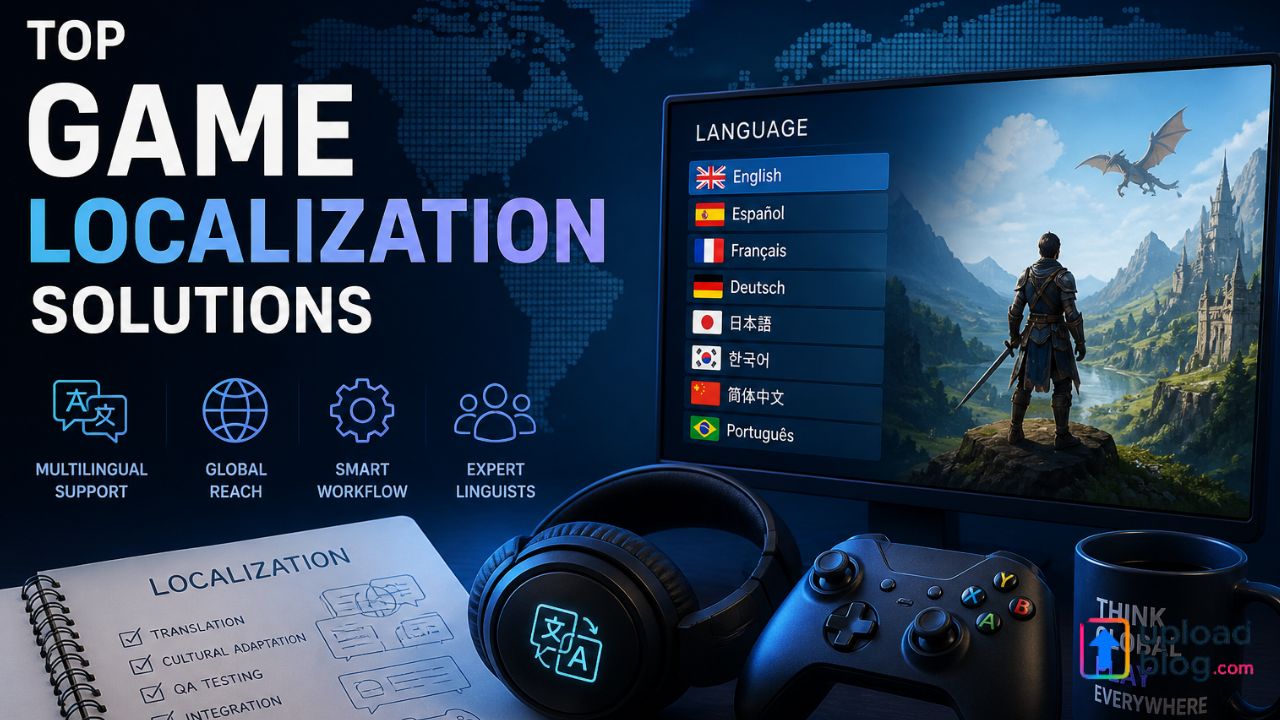
Top Game Localization Solutions
The landscape of game localization has evolved dramatically, with solutions now ranging from enterprise-grade platforms managing complex workflows to specialized tools for indie developers. Based on extensive industry experience and client success stories, I’ve identified the top 11 game localization companies that consistently deliver exceptional results across different game types, platforms, and budget constraints.
These solutions vary in their technological approaches, pricing models, and core competencies, but all share the ability to streamline the complex process of bringing games to international audiences. Some excel at managing extensive localization projects for AAA titles, while others offer nimble solutions for indie developers with limited resources. Let’s explore the strengths and specializations of each platform.
1. Crowdin
For developers seeking flexibility and community engagement, Crowdin offers a powerful localization management platform that supports both professional translation and crowdsourced approaches. As one of the most innovative game localization solutions available today, Crowdin has revolutionized how smaller studios approach international markets.
The platform excels in streamlining the technical aspects of localization, with robust integrations for continuous localization workflows. Automatic sync with repositories ensures translators always work with the latest content, while developers can easily implement updated translations without disrupting development cycles.
Crowdin’s hybrid approach allows studios to combine professional translators with community contributions, effectively balancing quality, authenticity, and budget constraints. This model has proven particularly successful for indie games with dedicated fan bases willing to contribute to localization efforts.
2. Lionbridge
Lionbridge stands as one of the most comprehensive game localization services available, offering end-to-end solutions for developers of all sizes. With a specialized gaming division and extensive experience localizing AAA titles, Lionbridge brings unparalleled linguistic expertise to the table.
What sets Lionbridge apart is its global network of over 100,000 language experts, many specifically trained in gaming terminology and cultural nuances. Their localization services extend beyond text translation to include voice-over production, cultural consultation, and rigorous linguistic quality assurance.
Particularly valuable for complex projects, Lionbridge offers dedicated project managers who understand game development workflows and can integrate seamlessly with existing production pipelines. Their experience with major gaming platforms – from PC and console to mobile and VR – ensures technical compatibility regardless of your target environment.
3. Keywords Studios
Keywords Studios has established itself as a powerhouse in game localization through strategic acquisitions of specialized service providers. This approach has created a comprehensive solution covering all aspects of game adaptation for international markets.
Their services span the entire localization spectrum: translation, voice production, localization testing, and cultural consultation. What distinguishes Keywords is their deep understanding of gaming contexts across genres and their ability to handle massive projects with tight deadlines – critical for major game releases.
Keywords’ player-focused testing methodology ensures that localized content resonates with target audiences. Their functional testing teams verify that localized versions maintain gameplay integrity, catching issues that might affect player experience before release.
4. Smartling
Smartling represents the cutting edge of technology-driven localization. Their cloud-based platform combines AI-powered translation management with powerful collaboration tools, making them ideal for development teams seeking agility and transparency in their localization process.
The platform’s strengths lie in automation and workflow management. Smartling’s visual context feature allows translators to see exactly how text appears in-game, significantly reducing context-related errors that plague many localization projects. Their centralized glossary management ensures consistency across all game content, while real-time collaboration tools facilitate communication between developers and translators.
Smartling’s analytics dashboard provides detailed insights into translation progress, quality metrics, and cost management – valuable data for project planning and continuous improvement. Their integration capabilities with common game engines and development platforms further streamline the localization process.
5. SDL Trados Studio
SDL Trados Studio represents the gold standard in translation memory technology. While not exclusively for games, its sophisticated linguistic tools make it indispensable for maintaining consistency across complex gaming narratives and terminology.
The platform’s strength lies in its advanced translation memory capabilities, terminology management, and quality assurance features. For games with extensive text content – such as RPGs or narrative adventures – these tools ensure consistency across hundreds of thousands of words and multiple language versions.
SDL’s machine translation integration provides first-draft translations that can accelerate the localization process, though human refinement remains essential for quality. Their terminology verification tools are particularly valuable for games with unique vocabularies or complex fictional worlds.
6. Lokalise
Lokalise offers a developer-friendly approach to game localization with its intuitive interface and powerful API capabilities. The platform streamlines collaboration between development teams and translators through real-time editing features and contextual information sharing.
What distinguishes Lokalise is its focus on automation and workflow integration. Features like screenshot annotations, version history, and branched projects align well with agile development methodologies common in game studios. Their webhook functionality allows for automatic updates whenever translations change – particularly useful for games with frequent content updates.
Lokalise’s pricing model scales efficiently with project size, making it accessible for indie developers while remaining robust enough for larger productions. Their quality assurance tools help catch formatting issues, missing translations, and inconsistencies before they reach players.
7. MoGi Group
MoGi Group specializes in tailored localization services specifically for the gaming industry. Their approach emphasizes cultural adaptation alongside linguistic accuracy, ensuring games resonate authentically in target markets.
What sets MoGi apart is their comprehensive understanding of gaming cultures across regions. Their localization teams include active gamers who understand not just the language but also gaming contexts and player expectations in different markets. This expertise is particularly valuable for games with cultural references, humor, or community-focused content.
MoGi’s LQA testing methodology identifies both linguistic issues and cultural missteps that might affect player reception. Their voice production services maintain emotional tone and character consistency across languages – critical for narrative-driven experiences.
8. XTM International
XTM International provides an enterprise-grade localization platform with particular strengths in automation and workflow management. Their cloud-based system facilitates complex localization processes with multiple stakeholders and approval stages.
The platform excels in handling diverse file formats common in game development, from standard resource files to complex spreadsheets and proprietary formats. Their AI-assisted translation suggestions and quality checks accelerate the localization process while maintaining standards.
XTM’s workflow designer allows studios to create custom localization pipelines matching their development methodology. Their analytics tools provide detailed insights into translation productivity, cost centers, and quality metrics – valuable for optimizing localization operations over time.
9. XLOC
XLOC was built specifically for video game localization, addressing the unique challenges of managing game content across multiple platforms and languages. Their deep integration with game development tools sets them apart from general-purpose localization solutions.
The platform excels at handling the complex asset relationships in games, maintaining contextual connections between related content pieces. Their versioning system allows for simultaneous development and localization – essential for compressed release schedules.
XLOC’s simulation capabilities let teams preview how translated content will appear in-game without actual implementation, catching formatting and UI issues early. Their experience with major game engines provides valuable technical compatibility across development environments.
10. Phrase
Phrase offers a developer-centric approach to game localization with strong API capabilities and integration options. Their platform emphasizes automation and continuous localization, aligning well with modern development methodologies.
What distinguishes Phrase is its focus on developer experience and workflow integration. Features like in-context editing, comprehensive API access, and automation capabilities streamline the technical aspects of localization. Their branching and versioning support accommodates complex development cycles with multiple concurrent versions.
Phrase’s over-the-air updates for mobile games allow developers to update translations without requiring app updates – valuable for rapid iteration and correction of localization issues post-launch.
11. Transifex
Transifex combines powerful localization management tools with collaboration features that bring developers, translators, and community contributors together. Their platform offers particular strengths for continuous localization in live service games.
The solution excels at handling dynamic content updates and maintaining consistency across expanding game worlds. Their Content Delivery Network ensures translated content is served quickly to users worldwide – important for text-heavy games and global launches.
Transifex’s source file synchronization automatically detects changes in original content, flagging affected translations for review. Their translation memory and glossary tools ensure consistency even as games evolve through updates and expansions.
How to Choose a Game Localization Company
Selecting the right localization partner is one of the most consequential decisions in bringing your game to international markets. Having worked with numerous providers across projects of varying scales and complexities, I’ve developed a structured approach to evaluation that goes beyond surface-level features and marketing claims.
The ideal partner isn’t necessarily the largest or most expensive, but rather the one whose capabilities, experience, and workflow best align with your specific project needs. Some studios require deep integration with their development pipeline, while others prioritize specialized expertise in certain languages or game genres.
Let’s explore the key criteria you should consider when evaluating potential localization partners and the red flags that might indicate potential challenges down the road.
Key Evaluation Criteria
When assessing potential localization partners, focus on these essential factors:
● Gaming Industry Experience: Look for providers with specific experience in your game genre. Localizing an RPG with complex narrative differs dramatically from a casual mobile game with minimal text.
● Language Expertise: Verify that native speakers handle target languages, especially for markets where cultural nuance is crucial. Request translator credentials and examples of previous gaming work.
● Technical Capabilities: Ensure the provider can handle your file formats, integrate with your development tools, and support your release schedule requirements.
● Quality Assurance Process: Examine their linguistic and functional testing methodologies. The best partners offer both linguistic review and in-context testing with actual gameplay.
● Scalability: Consider whether the provider can grow with your needs, supporting additional languages or content updates as your game expands.
● Communication Practices: Evaluate responsiveness, reporting systems, and project management approaches. Clear communication channels prevent costly misunderstandings.
I’ve found that requesting a small test project often reveals more about a provider’s capabilities than lengthy discussions. This hands-on evaluation demonstrates their actual workflow, quality standards, and communication style before committing to a larger partnership.
Red Flags to Avoid
Through experience, I’ve identified several warning signs that often precede localization challenges:
● Unrealistic Promises: Be wary of providers guaranteeing extremely quick turnarounds without adequate resources or technological justification. Quality localization requires appropriate time.
● One-Size-Fits-All Approach: Each game has unique localization requirements. Providers who don’t ask detailed questions about your specific project may deliver generic results.
● Lack of Gaming References: Localization providers without specific gaming experience often underestimate the contextual understanding required for effective game adaptation.
● Inadequate Quality Control: Partners should clearly articulate their review process, including how they handle context-specific challenges and cultural adaptation.
● Poor Communication Practices: Delayed responses during the evaluation phase typically indicate deeper organizational issues that will affect your project.
I once worked with a provider who claimed extensive gaming experience but delivered translations that misinterpreted core gameplay terminology. Their portfolio had included games, but their actual gaming expertise was superficial – a costly lesson in thorough vetting.
Cost Considerations
Pricing models vary significantly across localization providers, making direct comparisons challenging. Look beyond per-word rates to understand the total value proposition:
● Included Services: Determine whether quality assurance, project management, and technical implementation assistance are included or billed separately.
● Translation Memory Discounts: Quality providers offer reduced rates for repeated content and leverage translation memory across updates and expansions.
● Hidden Costs: Inquire about potential additional charges for rush jobs, specialized content types, or implementation support.
● Long-term Value: Consider how the provider supports ongoing localization needs, including updates and expansions. Lower upfront costs may lead to higher expenses over time if quality or efficiency is compromised.
The most cost-effective approach often involves balancing professional translation for critical content with more flexible solutions for less visible game elements. This strategic allocation of resources maximizes impact while controlling costs.
FAQ
What is game localization and how does it differ from translation?
Game localization encompasses the comprehensive adaptation of all game elements – text, audio, cultural references, imagery, and user interfaces – to resonate authentically with players in different regions. Unlike basic translation, which simply converts text between languages, localization ensures the game experience feels natural and culturally appropriate for each target market.
How do I choose the right game localization company for my project?
Evaluate potential partners based on their gaming industry experience, language expertise, technical capabilities, quality assurance processes, scalability, and communication practices. Consider their experience with your specific game genre and target platforms. Request samples and references from similar projects, and start with a small test project before full commitment.
What are the costs associated with game localization?
Costs vary based on project scope, language pairs, content types, and service levels. Text translation typically ranges from $0.08-0.25 per word depending on language and complexity. Audio localization adds $125-500 per hour of recorded content. Most projects also include project management fees (10-15%) and quality assurance testing. Translation memory can reduce costs for repeated content and updates.
How can game localization increase my game’s market reach and revenue?
Quality localization directly impacts international sales by removing language barriers and cultural disconnects that prevent player engagement. Games with professional localization typically see 30-50% higher download/purchase rates in target markets compared to English-only versions. Players also demonstrate longer engagement time and higher in-app purchase rates when experiencing content in their native language.
What are the key components of effective game localization?
Successful localization includes linguistic adaptation (text, dialogue, UI), cultural adaptation (references, humor, symbols), technical implementation (character support, UI flexibility), audio localization (voice-over, subtitles), and thorough testing. The process should preserve the core gameplay experience while making it feel native to each target culture.
Conclusion
The evolution of game translation services has transformed what was once a cumbersome afterthought into a strategic advantage for developers targeting global audiences. The platforms and services reviewed here represent the current state of the art in game localization technology, each offering unique advantages for different development scenarios.
As we’ve explored, successful localization extends far beyond simple translation – it requires thoughtful cultural adaptation, technical integration, and quality assurance processes tailored to gaming contexts. The right localization partner doesn’t just convert words; they preserve the emotional impact and player experience that makes your game special across linguistic and cultural boundaries.
My experience has consistently shown that games treated as global products from early development stages achieve the most seamless and authentic localization results. By selecting the right tools and partners from the solutions presented here, developers of any size can successfully navigate the complexities of bringing their games to global audiences.
Whether you’re an indie developer looking to expand beyond your home market or an established studio seeking to optimize your international presence, investing in proper localization infrastructure yields returns far beyond its costs. In today’s global gaming landscape, effective localization isn’t just about accessing new markets – it’s about respecting players enough to speak to them in their own language, both literally and culturally.