
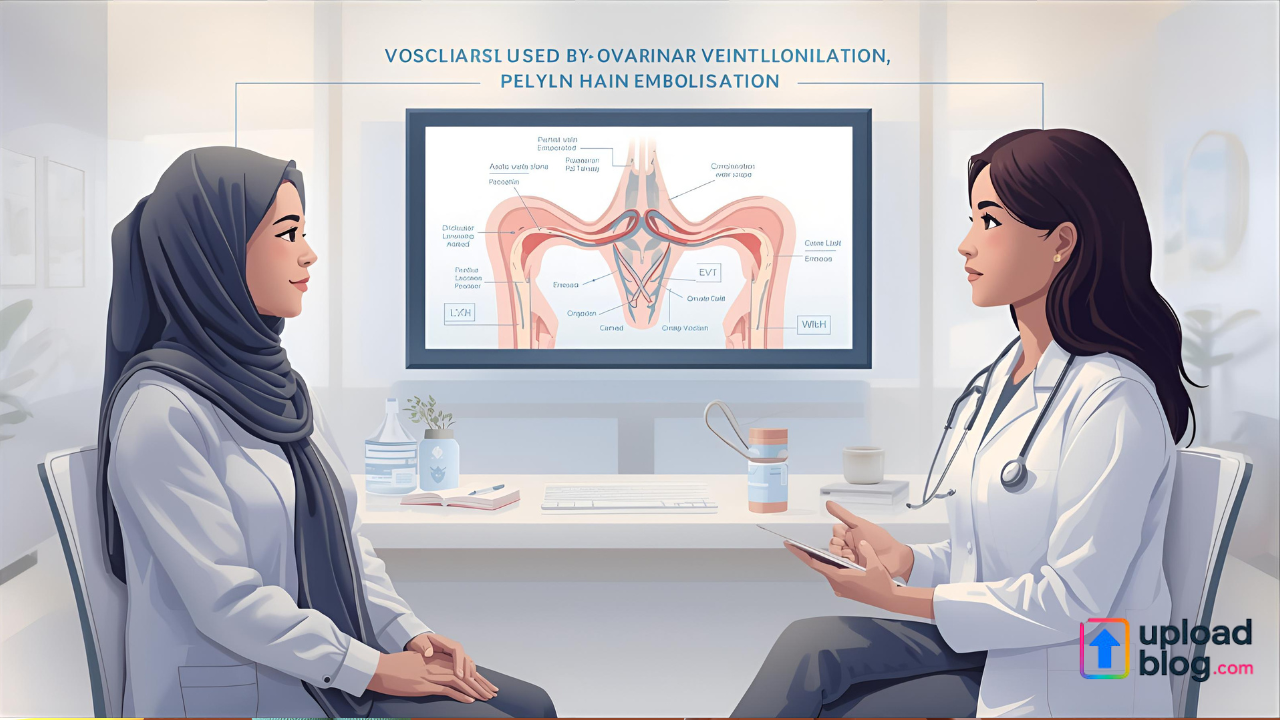

Understanding Pelvic Pain and Its Causes
Pelvic pain is a common condition that affects many women, often leading to discomfort that interferes with daily life. In some cases, this pain is linked to an underlying vascular issue known as pelvic congestion syndrome (PCS). This condition occurs when the veins in the pelvis become enlarged and fail to function properly, causing blood to pool and increase pressure in the pelvic region. The result is chronic pain that may worsen when standing for long periods, during menstruation, or after sexual intercourse.
While there are various causes of pelvic pain—including gynaecological, urinary, and gastrointestinal issues—pelvic congestion syndrome is one of the lesser-known yet treatable conditions. One effective treatment that has gained recognition among specialists is the ovarian vein embolisation procedure.
What Is the Ovarian Vein Embolisation Procedure?
The ovarian vein embolisation procedure is a minimally invasive treatment designed to relieve symptoms of pelvic congestion syndrome by targeting the root cause—dilated ovarian veins. The procedure involves inserting a small catheter through a vein in the groin or neck, guided by imaging technology. Once the affected veins are identified, tiny coils or a sclerosing agent are used to block the problematic veins, preventing the backward flow of blood.
By closing off these veins, the procedure reduces venous pressure and improves overall circulation in the pelvic region. Over time, this alleviates pain and discomfort, allowing the patient to return to normal activities without ongoing symptoms.
How It Works
The goal of ovarian vein embolisation is to redirect blood flow away from damaged veins and through healthy pathways. This process effectively reduces congestion and inflammation, similar to how varicocele embolisation is used to treat varicose veins in men. Both procedures use the same principle—blocking malfunctioning veins to restore normal blood flow and relieve pressure in affected areas.
The embolisation materials used are safe and remain permanently in place to ensure the treated veins stay closed. The body naturally adapts by rerouting blood flow through unaffected veins, reducing symptoms of pain and heaviness.
Benefits of Ovarian Vein Embolisation

Minimally Invasive Technique
One of the main advantages of ovarian vein embolisation is that it is minimally invasive. Unlike open surgery, it requires only a small incision, reducing the risk of infection and speeding up recovery time. Most patients can return home on the same day, with minimal downtime.
Effective Pain Relief
Many women experience significant relief from chronic pelvic pain following the procedure. Because it targets the cause rather than just the symptoms, the results are long-lasting and often permanent.
Quick Recovery
Recovery from ovarian vein embolisation is typically faster than with surgical alternatives. Most patients can resume light activities within a few days and return to full activity within a week.
High Success Rate
Clinical studies and patient experiences show a high success rate in reducing pelvic pain related to venous insufficiency. Some women even report improved quality of life and reduced need for pain medication after the procedure.
Comparison to Varicocele Embolisation in Sydney
Varicocele embolisation in Sydney is a similar procedure performed on men who have varicose veins in the scrotum, known as varicoceles. These veins can cause discomfort, swelling, and sometimes fertility issues. Like ovarian vein embolisation, varicocele embolisation uses imaging guidance to locate and block the problematic veins.
Both treatments share a common goal: to relieve pain caused by venous reflux and improve blood circulation. The key difference lies in the anatomical area being treated. In women, the focus is on the pelvic veins, while in men, it is the scrotal veins. However, both procedures are minimally invasive, effective, and typically performed as outpatient treatments.
What to Expect During the Procedure

The ovarian vein embolisation procedure is performed by an interventional radiologist in a specialised imaging suite. Patients are usually given a mild sedative to help them relax but remain awake throughout the procedure. After cleaning the access site, a small catheter is inserted into a vein—typically in the groin or neck.
Using X-ray imaging, the radiologist guides the catheter to the affected ovarian veins. A contrast dye is injected to visualise the veins clearly, allowing precise placement of the embolic material. Once the veins are sealed, the catheter is removed, and a small bandage is applied. The entire process usually takes about one hour.
Recovery and Aftercare
After the procedure, patients are observed for a short period to ensure stability before being discharged. Mild discomfort, bruising, or tenderness at the access site is normal but temporary. Pain relief medication may be prescribed if needed. Most women return to work and normal activities within a few days, although strenuous exercise should be avoided for about a week.
Follow-up imaging may be recommended to confirm the success of the embolisation and to ensure no recurrence of symptoms. The results are typically long-lasting, and many patients report significant improvement within weeks of the treatment.
Potential Risks and Complications
Like any medical procedure, ovarian vein embolisation carries some risks, though they are relatively low. Possible complications include infection at the puncture site, allergic reaction to the contrast dye, or migration of the embolic material. However, these risks are rare and can be effectively managed by an experienced interventional radiologist.
Is Ovarian Vein Embolisation Right for You?
Women who experience chronic pelvic pain, particularly pain that worsens when standing or during menstruation, may benefit from this procedure. A diagnostic ultrasound or MRI can help confirm whether pelvic congestion syndrome is the underlying cause. Consulting a specialist who performs both ovarian and varicocele embolisation procedures can help determine the most suitable treatment plan.
Final Thoughts
The ovarian vein embolisation procedure offers an effective, minimally invasive solution for women suffering from chronic pelvic pain caused by venous insufficiency. By addressing the root cause, it provides lasting relief and helps restore comfort and quality of life. For those considering treatment options similar to varicocele embolisation in Sydney, ovarian vein embolisation stands out as a proven method with a strong track record of safety and success.